The Stretch
Toward Luxury:
Mercedes Rewrites
China’s EV Playbook
There’s a moment in every major automotive shift when a brand stops adapting and starts leading. For Mercedes-Benz in China, that moment looks a lot like this: a stretched, electrified, rear-seat-first SUV that doesn’t exist anywhere else on the planet.
The EQS SUV Long Wheelbase — built exclusively for the Chinese market — is Mercedes quietly telling the world’s most competitive luxury EV arena that it isn’t here to play catch-up. It’s here to redefine what premium electric mobility looks like when you stop thinking about drivers and start thinking about passengers.
For professionals and business leaders tracking the intersection of technology, consumer behaviour, and strategic market positioning, this launch deserves more than a quick glance. It’s a window into how legacy automakers are evolving — and who they believe will be sitting in the back seat of the future.
What Exactly Is the EQS SUV LWB?
Before we get into strategy and implications, let’s be clear about what Mercedes has actually built here — because the details matter.
The EQS SUV Long Wheelbase takes Mercedes’ flagship all-electric SUV and stretches it. Literally. The wheelbase — that’s the distance between the front and rear axles — has been extended by roughly 140 millimetres compared to the global EQS SUV model. That extra room doesn’t go to the luggage compartment or the driver’s cabin. It goes entirely to the rear.
Think executive lounge. Think business-class aircraft legroom. Think the kind of space where a senior executive can hold a conference call, review documents, or simply decompress between meetings — all inside a near-silent electric vehicle that produces zero tailpipe emissions and delivers a claimed range of around 800 kilometres on China’s CLTC testing cycle.
🔧 Key Specifications at a Glance
| Body Type | Full-size Electric SUV (7-seat capable, LWB) |
| Wheelbase vs Standard | Approximately +140mm extended |
| Claimed Range (CLTC) | ~800 km on single charge |
| Drive Configuration | Dual-motor All-Wheel Drive |
| Interior Feature Focus | Rear Executive Suite configuration |
| MBUX Hyperscreen | Standard — spans full dashboard width |
| Market Availability | China Exclusive — not sold globally |
| Charging | DC Fast Charge compatible; AC onboard |
The rear cabin is where Mercedes clearly spent the most creative energy. Business-class reclinable seats, individual climate zones, a rear-seat entertainment system that rivals a premium home theatre setup, and a noise insulation package so thorough that you’d genuinely forget you’re in traffic.
This isn’t a SUV that happens to be electric. It’s an executive mobility statement that happens to have four wheels.
Why China Gets This First — And Only
This is the question that makes the EQS SUV LWB genuinely interesting from a business intelligence standpoint. Mercedes didn’t build a long-wheelbase variant and then decide to launch it in China. The vehicle was designed around Chinese market behaviour from day one. That’s a meaningful strategic distinction.
China is Mercedes-Benz’s single largest market globally. In recent years, the country has accounted for roughly one-third of the company’s total global sales volume. So when the Chinese consumer starts showing clear, data-backed preferences — and when local competitors start eating into your premium positioning — you don’t just tweak your marketing. You build a new product.
What Chinese Premium Buyers Actually Want
Here’s the cultural and commercial reality that Western auto brands took years to properly understand: in China’s premium segment, the most important seat in the car is not the driver’s seat. It’s the rear right.
- Chauffeur culture is embedded in Chinese corporate life. Senior executives, entrepreneurs, and high-net-worth individuals are routinely driven rather than self-driven. The buyer and the driver are often different people entirely.
- Long commutes through dense urban corridors — especially in tier-one cities like Beijing, Shanghai, and Shenzhen — mean passengers spend significant time in the rear cabin. Comfort and productivity features aren’t nice-to-haves; they’re purchasing criteria.
- Status signalling in China’s premium segment is sophisticated and highly visible. A long-wheelbase vehicle communicates hierarchy and success in a way that a standard-wheelbase model simply doesn’t, regardless of the badge on the front.
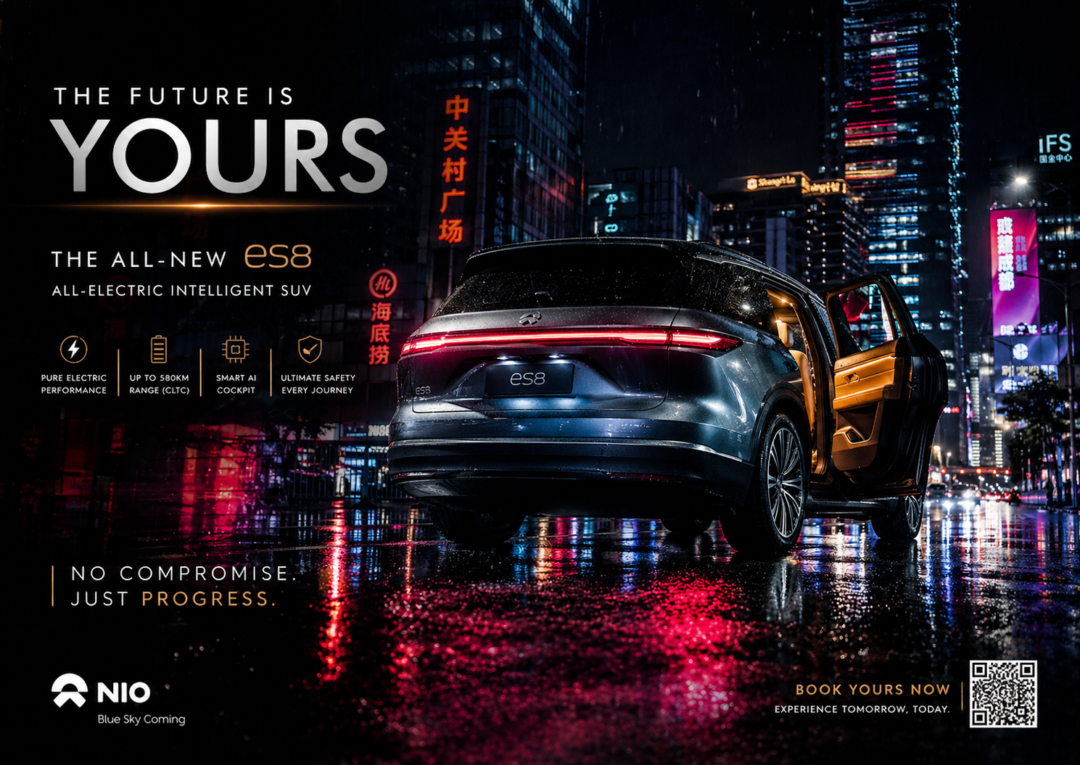
- Domestic EV competitors have raised the bar fast. Brands like Li Auto, NIO, and BYD’s Yangwang division have launched technologically impressive, space-generous electric SUVs that have genuinely disrupted the premium space. Mercedes needed an answer that played to its heritage strengths while meeting local expectations head-on.
The Strategic Logic Behind the Stretch
Let’s think about this from a pure business strategy perspective — because the EQS SUV LWB isn’t just a product decision. It’s a market positioning statement with several layers.
Mercedes’ most powerful competitive advantage against Chinese domestic brands is something that cannot be manufactured quickly: decades of luxury brand equity. The EQS SUV LWB leans into this by positioning the vehicle as the electric evolution of the S-Class long wheelbase — a car synonymous with corporate prestige across Asia for over two generations.
The fact that this vehicle is China-exclusive is not a limitation — it’s a feature. It tells Chinese buyers that Mercedes built something specifically for them, not something adapted from a global template. In luxury goods marketing, bespoke is always more compelling than universal. Being the only market in the world with access to this product is a powerful statement.
An 800km CLTC range figure isn’t just impressive — it’s strategically calibrated. It effectively removes the most common objection to premium EV adoption among high-usage business passengers: the refuelling inconvenience. At 800km of range, a vehicle can realistically serve as a daily executive transport with a charging schedule that barely disrupts a working week.
The MBUX Hyperscreen — Mercedes’ sweeping, full-dashboard display system — is standard in the EQS SUV LWB. Combined with the rear cabin entertainment and climate systems, it brings a technology stack that genuinely competes with what domestic brands offer in terms of connected, smart features. Mercedes isn’t abandoning tech to focus purely on heritage; it’s doing both.
This is an often-overlooked angle. Major Chinese corporations — particularly those with international exposure or state enterprise affiliations — face increasing pressure to demonstrate sustainability commitments. Transitioning executive transport to zero-emission electric vehicles is a visible, reportable action. The EQS SUV LWB gives fleet procurement teams a genuinely premium option that also ticks the ESG reporting box.
The broader Chinese EV market has seen aggressive price competition that has squeezed margins across the industry. By focusing its China-exclusive product on the ultra-premium segment, Mercedes is deliberately staying above the price-war fray. This is a margin-protection strategy as much as a product strategy — compete on value and exclusivity, not on price.
“In China’s luxury auto segment, the rear seat is the boardroom. Mercedes just built a better boardroom.”
IndiaThreads Business Intelligence — April 2026
Who Mercedes Is Actually Competing Against
Understanding this launch requires understanding the competitive landscape honestly — and it’s more crowded than it looks from the outside.
🚗 The Real Competitors in China’s Ultra-Premium EV Space
- Li Auto L9 Pro / MEGA: Li Auto has been extraordinarily successful at packaging family-oriented luxury with extended range. Their vehicles punch well above their price point in feature density. They’ve pulled some consumers who might otherwise have defaulted to German brands.
- NIO ET9: NIO’s flagship sedan, positioned squarely at the ultra-luxury segment, with a battery swap network, high-tech features, and a growing premium brand narrative. The ET9 is a direct play for the BMW 7 Series and Mercedes S-Class buyer — exactly the demographic that would consider an EQS SUV LWB.
- BYD Yangwang U8: BYD’s ultra-premium off-road SUV showed the industry that domestic brands could credibly claim the “statement vehicle” territory previously owned by brands like Land Rover and Mercedes-Benz G-Class. Luxury positioning is no longer a foreign brand monopoly.
- BMW iX Long Wheelbase (China): BMW has made similar market-specific moves, extending wheelbases for the Chinese market. Mercedes and BMW are essentially running parallel strategies — both recognising that the same global product doesn’t win in China’s nuanced premium market.
- Porsche Macan EV and Cayenne e-Hybrid: Porsche’s electrified SUV lineup appeals to the performance-oriented luxury buyer. Different use case from the EQS SUV LWB, but competing for the same wallet in the same income bracket.
The honest reality is that Mercedes is facing genuine competition from multiple directions — both the traditional German rivals who know this market well, and the domestic Chinese brands who know it even better. The EQS SUV LWB is Mercedes’ attempt to carve a space that none of those competitors can easily replicate.
What This Means for Business Leaders and Professionals
If you’re a professional or business decision-maker — whether in fleet procurement, corporate travel policy, executive transport management, or simply evaluating how premium mobility is evolving — the EQS SUV LWB signals several things worth paying attention to.
For Corporate Fleet Managers
The electrification of the executive fleet tier is accelerating. The EQS SUV LWB provides a credible, premium, zero-emission option for organisations that need to demonstrate sustainability progress without compromising on the passenger experience that senior leadership expects. Procurement teams in China evaluating their executive transport contracts have a genuinely compelling new option to assess.
For Investors Watching the Auto Sector
Mercedes’ China-exclusive strategy is a template worth watching. Rather than selling globally uniform products with localised marketing, the company is engineering market-specific variants. This is a capital-intensive approach — but in a market as large and specific as China, it may be the only approach that defends premium margin over the long term.
For Business Leaders Traveling in China
- If you’re working with Chinese enterprise clients, understanding the cultural weight of executive transport matters. A meeting facilitated by a long-wheelbase EV from a heritage European brand communicates a level of operational sophistication that is noticed and appreciated.
- If you’re evaluating business partnerships with Chinese automotive companies, the EQS SUV LWB is evidence that Mercedes has committed deeply to localisation — not just assembly localisation, but product and market strategy localisation. That’s a meaningful signal about the company’s long-term China positioning.
- If you’re in the mobility or logistics technology space, the integration requirements of vehicles like the EQS SUV LWB — connectivity APIs, fleet management software compatibility, charging infrastructure integration — represent real business opportunities for tech providers in the enterprise mobility stack.
The broader lesson here is about market-first thinking. Mercedes didn’t ask, “how do we sell our existing product in China?” They asked, “what does China’s premium EV buyer actually need?” The answer was a longer wheelbase, a rear-cabin-first interior philosophy, and a range figure that eliminates practical objections. The product followed the insight, not the other way around.
That’s a discipline that applies well beyond the automotive industry.
The Bigger Picture — Mercedes, China, and the Future of Luxury EV
Let’s zoom out fully for a moment. The EQS SUV LWB is one product, but it reflects a much larger strategic question that every global luxury automaker is wrestling with right now: how do you remain a premium brand in a market that is simultaneously your biggest opportunity and your most demanding competitive environment?
China’s EV transition has been faster and more thorough than virtually any analyst predicted five years ago. The country now manufactures, sells, and exports more electric vehicles than any other nation. Its domestic brands have gone from being dismissed as low-quality competitors to being genuinely formidable players in the global premium space. BYD, NIO, Li Auto, and Huawei-backed AITO are not footnotes — they are the story.
Against that backdrop, Mercedes’ approach with the EQS SUV LWB can be read as a deliberate return to what the brand does best: extraordinary craftsmanship, exquisite rear-cabin experience, and the quiet assurance of a brand that has been building the world’s most prestigious cars for well over a century.
- Electrification is now table stakes. No serious automaker in China debates whether to go electric — the question is how fast, how fully, and at which price point. Mercedes has answered that for the ultra-premium segment with commitment.
- The “China as a learning lab” dynamic is real. The EQS SUV LWB, designed and deployed exclusively in China, will generate product, market, and customer behaviour data that could inform future global product decisions. China is not just a sales market for Mercedes — it’s a product development intelligence source.
- The localisation premium is a genuine competitive weapon. Global brands that build for local markets — not just sell to them — tend to build deeper loyalty and stronger pricing power. The EQS SUV LWB is evidence that Mercedes understands this dynamic and is willing to invest in executing it at the product level.
- The next frontier is autonomy. China’s regulatory environment for autonomous driving features is evolving rapidly. Future iterations of vehicles in this class — long-wheelbase, rear-seat-priority electric SUVs — will increasingly integrate Level 3 and Level 4 autonomous capability, further transforming the rear cabin from a passenger space into a fully mobile productivity environment.
The implications for luxury mobility — and for the business travellers who depend on it — are significant. The executive transport of 2030 will likely be electric, self-driving on certain routes, and designed primarily around the experience of the person in the back seat. Mercedes, with the EQS SUV LWB, is building the prototype of that future right now.
Final Word:
A Stretch in the Right Direction
The Mercedes-Benz EQS SUV Long Wheelbase is, at face value, a bigger SUV for a specific market. But strip away the product description and what you’re looking at is a sophisticated market intelligence response — a vehicle that encodes everything Mercedes has learned about what China’s premium buyers actually value, built into hardware and software that goes further than any prior EV offering in its class.
For professionals and business leaders, the broader lesson is about strategic specificity. The era of one-size-fits-all premium is ending. In a world where local preferences are increasingly legible through data, and where local competitors can move fast and furiously, the brands that win will be the ones willing to go further — to stretch their thinking, their engineering, and their products — to meet markets on their own terms.
Mercedes has stretched its most prestigious EV platform by 140 millimetres for China. That’s not a small engineering decision. It’s a very clear signal about where the company thinks the future of luxury mobility is being decided — and a commitment to compete for it on local terms.
140 millimetres of extra space. A world of strategic intent behind it.
Analysis — April 25, 2026