🚨 Breaking Analysis | April 26, 2026
When the Dinner
Became
a Crime Scene.
Okay. Take a breath. Because what happened at the Washington Hilton on April 25, 2026 is the kind of event that doesn’t just make headlines — it reshapes how a country thinks about security, political violence, and what it means when someone walks into a crowded room full of the most powerful people on earth with a shotgun and a plan.
A gunman tried to breach the security perimeter of the White House Correspondents’ Dinner — with President Trump, Vice President Vance, cabinet members, and roughly 2,600 journalists and dignitaries inside. He was stopped. One Secret Service agent was shot in the vest. The event was evacuated. The suspect, Cole Tomas Allen, is now in federal custody.
For anyone studying political science or security studies, this is a live-action case study in everything — threat assessment, presidential security protocols, political violence patterns, and the very real vulnerabilities that exist even at the most heavily guarded gatherings in American life. Let’s go through all of it.
The Night the WHCA Dinner Became a Lockdown
Every year, the White House Correspondents’ Association (WHCA) dinner brings together the President, senior officials, journalists, and celebrities for what is traditionally a night of awkward jokes and mutual appreciation in a formal ballroom. It’s one of Washington’s most visible and high-security annual events.
The 2026 edition was already different for one reason: President Trump attended. He had skipped the dinner entirely during his first term, so his appearance this year — with First Lady Melania Trump, VP Vance, and a full cabinet presence — made this the most politically significant WHCA dinner in over a decade.
What no one in that ballroom expected was what happened at 8:36 p.m.
Trump was inside the hotel and was moved to a secure area almost immediately. He departed for the White House at around 9:45 p.m. EDT after law enforcement cleared the building and declared the area a crime scene. The event — which had already resumed briefly after a first announcement that things were under control — was ultimately cancelled for the evening.
WHCA president Weijia Jiang later confirmed from the stage that Trump planned to give a briefing from the White House, and that the dinner would be rescheduled within 30 days.
Who Is Cole Tomas Allen?
This is where it gets complicated — because Allen doesn’t fit easy categories. He isn’t a known political extremist. He had no criminal record. He wasn’t on law enforcement’s radar in Washington, D.C. And yet he showed up at one of the most heavily guarded events in America with a shotgun, a handgun, and multiple knives.
🧑💻
- Age: 31 years old, from Torrance, California
- Education: Mechanical engineering degree from Caltech (2017); Master’s in computer science from Cal State Dominguez Hills (2025)
- Weapons used: Shotgun (purchased August 2025), handgun (purchased 2023), multiple knives
- How he got there: Traveled from Los Angeles to Chicago by train, then Chicago to D.C. Checked into the Washington Hilton on Friday — the day before the event.
- Criminal record: None prior to this incident
- Prior radar: Not known to D.C. law enforcement
Investigators confirmed that Allen sent writings to members of his family before the shooting. Acting Attorney General Todd Blanche said Sunday morning that based on those writings, Allen appeared to be targeting members of the Trump administration — and potentially Trump himself. That assessment is described as “quite preliminary” while the full investigation continues.
Sources told CBS News that Allen told law enforcement he intended to shoot officials from the Trump administration. He is not cooperating with investigators, but people who knew him are speaking with law enforcement. His phone and electronic devices have been seized.
The Timeline — How Saturday Night Unravelled
Understanding how an event like this unfolds in real time is important for anyone studying security protocols and crisis response. Here’s the minute-by-minute picture:
Why This Matters — Security Studies Perspective
For students of political science and security studies, this incident is a layered case study in threat assessment, protective security, and the evolving nature of political violence in democratic societies. Let’s break down the key dimensions.
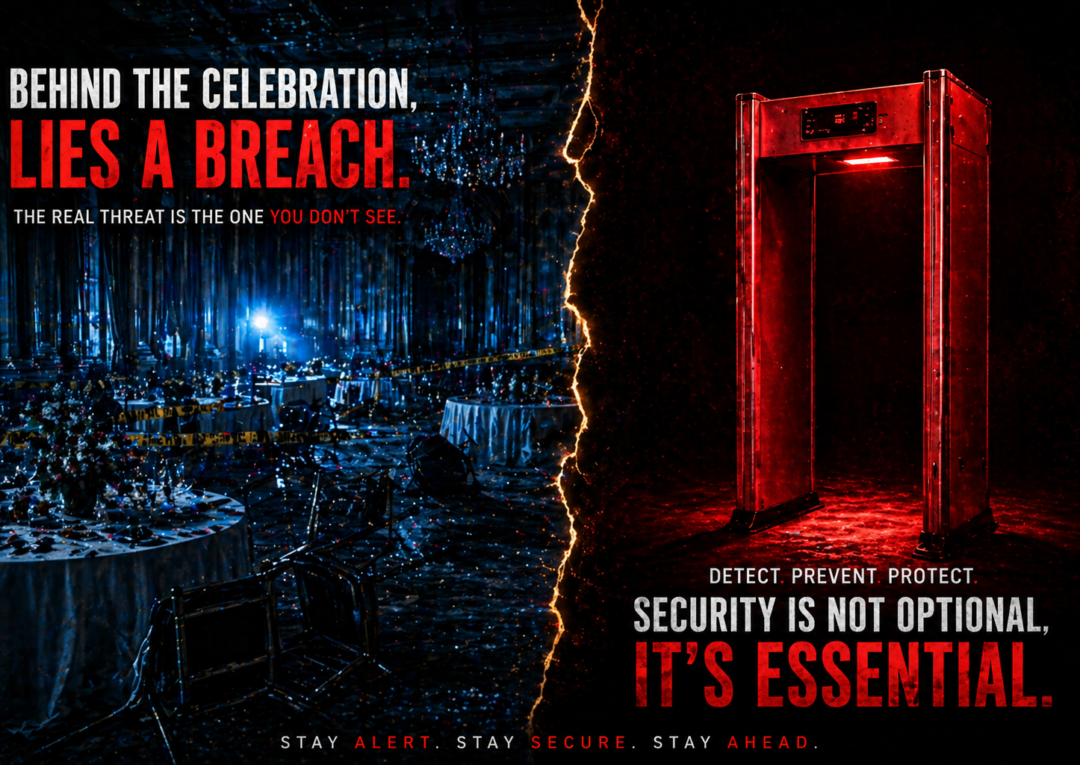
The Washington Hilton is a fully functioning hotel with public spaces. During the WHCA dinner, only the event areas were secured by Secret Service — not the entire building. Allen checked in as a legitimate guest the night before. This is a classic “soft perimeter” vulnerability. The tension between operational hotel function and maximum security is a real, unresolved challenge in protective security planning.
Allen purchased the shotgun legally in August 2025. He had no criminal record. This is the central dilemma that security services face globally — how do you identify someone as a threat before they cross a checkpoint? Background checks filter for criminal history; they don’t capture intent. This event will almost certainly reignite debates about red flag laws and pre-crime intelligence in the United States.
Commentators quickly placed this within a broader pattern — the 2024 assassination attempt on Trump in Butler, Pennsylvania; threats against public officials; rising political tension. Whether this represents a systemic trend or an isolated incident is a genuine scholarly debate. But the frequency of such events in recent years is statistically significant and worth serious analysis, not just political point-scoring.
Allen was not on D.C. law enforcement’s radar. His writings — sent to family before the attack — contained the intent. But those writings weren’t flagged in time. This is a recurring problem in targeted violence prevention: the information exists somewhere, but doesn’t reach the right people in time. Threat assessment professionals call this the “information-to-action gap.” It’s a genuine structural problem, not just a failure of vigilance.
Despite everything, the security response functioned largely as designed. The suspect was stopped before reaching the ballroom. The president and senior officials were evacuated safely. The injured agent survived because of his vest. These aren’t minor footnotes — they’re evidence that layered security architecture, even with gaps, can contain a threat. The checkpoint held. That matters.
The Washington Hilton has a dark history here. In 1981, John Hinckley Jr. shot President Reagan just outside the same hotel. That incident transformed how the Secret Service approaches presidential protection — motorcades, protective formations, medical response protocols all changed dramatically after 1981. Security analysts will now examine whether April 2026 triggers a similar reassessment of event security posture.
“He was only stopped at the checkpoint. Not before he booked the hotel. Not before he bought the gun. The layered security model held — but it held at the last line.”
Security Studies Perspective — Washington Hilton, April 2026
Key Concepts — For Students to Know
If you’re studying this event for a political science or security studies course, here are the foundational concepts this case touches on directly. These are the frameworks professors and analysts use to evaluate incidents like this one.
🔑 Core Analytical Frameworks
- Targeted Violence vs. Terrorism: Not every politically motivated attack meets the legal or academic definition of terrorism. Targeted violence — directed at specific individuals or institutions — is analyzed differently, often through behavioral threat assessment rather than counterterrorism frameworks.
- Protective Security Architecture: The concentric ring model of presidential security — outer perimeter, inner perimeter, personal protection detail — and where this incident penetrated each layer.
- The Lone Actor Problem: Allen, like many modern threat actors, appears to have operated alone. Lone actors are the hardest threat to detect because they don’t communicate with networks that intelligence services monitor.
- Soft Target Vulnerability: Even “hard” events like WHCA dinners have soft-target characteristics because of the civilian infrastructure they operate within — hotels, public spaces, mixed-use venues.
- Pre-Attack Behavior and Leakage: Allen sent writings to his family before the attack. “Leakage” — where a perpetrator communicates intent before an attack — is one of the most consistent findings in mass violence research. The question for scholars is: how do we build systems that catch these signals earlier?
- Political Climate and Radicalization: Understanding what social, political, or psychological factors contribute to someone deciding that attacking elected officials is a justifiable act — without making excuses for the act itself — is a core task of political violence research.
What Happens Next — Politically and Legally
This isn’t just a one-day story. The implications of the Washington Hilton incident will ripple through political debates, legal proceedings, and security policy for months to come. Here’s what to watch.
- Federal charges: Allen faces arraignment on initial charges of using a firearm during a crime of violence and assaulting a federal officer. Additional charges — potentially including attempted assassination of the President — are expected as investigators establish intent and premeditation through his writings and devices.
- Congressional hearings: Events like this almost always trigger oversight hearings. Expect congressional committees to summon Secret Service leadership to explain the security gaps — particularly how Allen, as a hotel guest, was able to position himself near the event area the night before.
- WHCA rescheduled dinner: The association has confirmed the dinner will be rescheduled within 30 days. Security protocols for the rescheduled event will almost certainly be significantly enhanced — possibly with full hotel sweeps and guest restrictions.
- Policy debate: The incident will fuel existing debates around red flag laws, mental health reporting, and whether gun purchase records should be cross-referenced with intelligence watchlists more aggressively. These are politically charged debates, but this event gives them renewed urgency.
- Motive investigation: The big unknown is still motive. Allen’s writings suggest political targeting, but investigators will need to establish the full picture — what drove a 31-year-old engineer from Torrance with a clean record to travel across the country and attempt this. That answer will shape both the prosecution and the broader policy conversation.
Final Thought:
Security Never Has a Perfect Night
But “it could have been worse” is not the same as “the system worked perfectly.” An armed man checked into the same hotel as the most powerful gathering in America. He positioned himself the night before. He charged a checkpoint with multiple weapons.
For students and scholars, that gap — between the system’s final success and the vulnerabilities that allowed the threat to get that far — is exactly where the serious analytical work begins. The outcome was fortunate. The process that led to that outcome has questions worth asking.
One dinner. One gunman. Five to eight shots. And a country, once again, having a conversation about political violence that it’s been having — with increasing frequency — for too long.
Breaking — April 26, 2026