Investigative Report · Healthcare Crisis · India
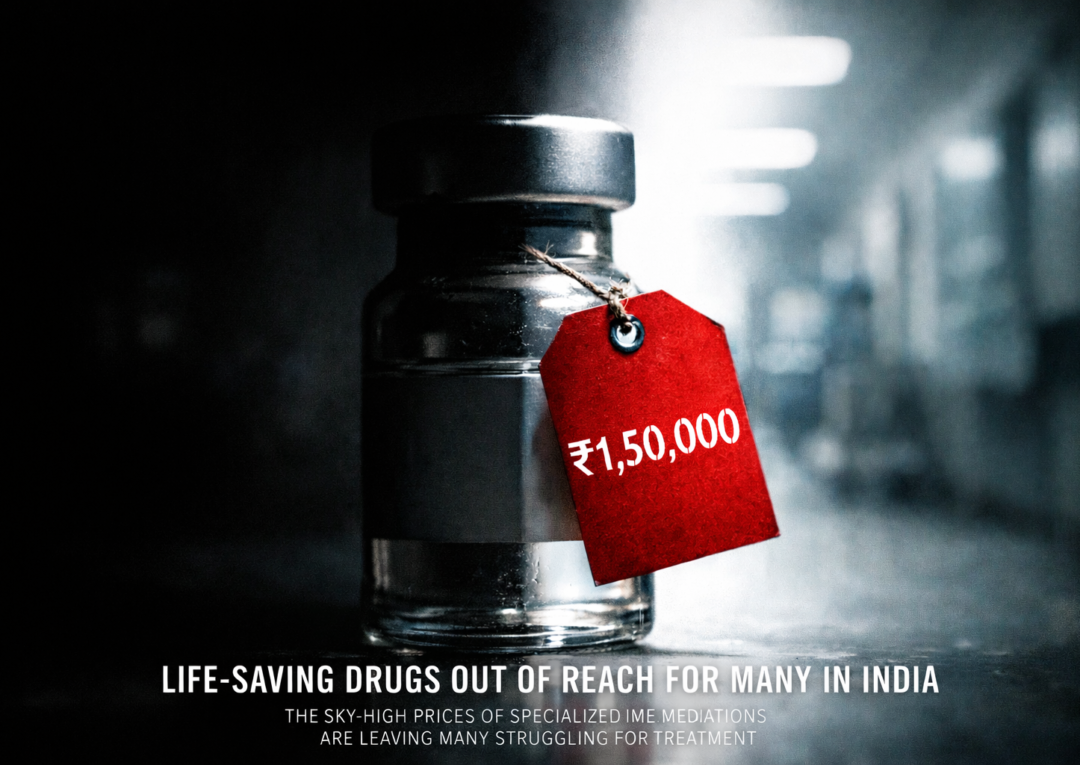
₹1.5 Lakh Per Shot
Leaked Faked
Sold to the Dying.
Inside the shocking scandal where a life-saving cancer drug disappeared from a top hospital — and deadly fakes ended up in the arms of desperate patients.
Imagine you’ve just been told you have cancer. The doctor says there’s a drug that could save your life — but one injection costs ₹1.5 lakh. Your family sells everything they have. You get the medicine. The injection is given. Weeks pass. Nothing improves. Then you find out the truth — what was put into your body wasn’t the real drug at all.
This isn’t a scene from a movie. This is the nightmare that unfolded when a precious, high-cost cancer drug meant for the most vulnerable patients — people fighting for their lives — got leaked out of a top hospital, funnelled into a shadowy black market, and replaced with fake substitutes that were sold right back to dying patients.
This is a story about money, desperation, greed, and a healthcare system that failed the people who needed it most. Let’s break it down — clearly and honestly.
What Happened? — The Shocking Leak
At the centre of this scandal is a high-end targeted cancer therapy drug — the kind used in oncology wards of major hospitals. These aren’t your regular medicines you pick up at a chemist. We’re talking about biological or monoclonal antibody drugs (fancy term: drugs made from living cells that target cancer specifically), each vial costing anywhere from ₹80,000 to over ₹1.5 lakh a shot.
Investigations revealed that significant quantities of this drug were being siphoned out of hospital storage. Not stolen in one dramatic robbery — but slowly, systematically, over months. A few vials here, a few there. The kind of theft that’s hard to notice unless someone is specifically looking for it.
The Twist: Once the real drug was taken out, it was often replaced with fake, diluted, or completely inactive substitutes — saline solution, plain water, or generic compounds with no therapeutic value. These fakes were repackaged to look identical to the real thing, then sold to patients who paid lakhs of rupees trusting they were getting genuine medicine.
The real stolen drug was sold on the black market — sometimes to private clinics, sometimes through shady intermediary distributors — at a discounted rate that still made the sellers enormous profit. Everyone in the chain got richer. And the patient? They got sicker.
Inside the Hospital: How Did This Happen?
The uncomfortable question everyone’s asking: how does medicine disappear from one of the country’s top hospitals without anyone noticing?
The answer is — it’s easier than you think. And that’s the most alarming part.
Inventory tracking systems in many hospitals
Entry points in hospital supply chains
Frequency of independent drug audits
Street value of oncology biologics
The Supply Chain Weak Points
- Pharmacy staff with access to high-value medicine storage — Multiple individuals handle drugs from procurement to patient administration. Even one corrupt link breaks the chain.
- Poor digital tracking — Many Indian hospitals still rely on manual registers for drug dispensing, especially in oncology wards where patient-specific doses are prepared fresh each day.
- Understaffed audit teams — Internal audits of costly drugs often happen quarterly or annually — plenty of time for thousands of rupees worth of medicine to disappear undetected.
- Trust-based systems in senior staff — Senior pharmacists, nurses, and even some doctors hold enormous unsupervised access to drug cabinets. A compromised insider is a significant risk.
- No barcode/RFID on individual vials — Unlike in some developed countries where each medicine unit is digitally traceable, many Indian hospitals don’t track individual vials from entry to disposal.
“A ₹1.5 lakh drug sitting in a hospital refrigerator with nothing but a handwritten log to track it — that’s not a security system. That’s an open invitation.”
Healthcare supply chain expert
The Black Market Network — Fake Drugs Sold to Patients
Once the real medicine left the hospital, it entered a murky world of middlemen, back-alley dealers, and unlicensed distributors. The black market for oncology drugs in India is not a small, isolated problem — it’s an organised, layered ecosystem.
How the Fake Drug Pipeline Works
- Theft from hospital storage — Insiders remove real vials and replace them with fake substitutes to avoid immediate detection.
- Re-labelling and repackaging — Counterfeit drugs are professionally packaged to look identical to originals. Batch numbers may even be forged using real hospital stamps.
- Distribution through grey channels — Fake drugs move through unlicensed distributors, some operating through legitimate-looking pharmacies or “procurement agents.”
- Sale to desperate patients or small clinics — Either directly to patients who “heard they could get it cheaper” or to small cancer clinics that buy from unverified sources to cut costs.
- Real stolen drug sold at black market profit — The genuine medicine is separately sold at a premium to private hospitals or wealthy individuals willing to pay for “guaranteed authentic” supply.
What Was Inside the Fake Vials?
Lab tests of seized counterfeit cancer drugs have found a range of dangerous substitutes:
- Normal saline (salt water) — harmless but completely useless
- Diluted versions with 5–10% of the actual active compound
- Unrelated generic drugs with similar-coloured solution
- In worst cases — contaminated solutions with bacteria or unknown compounds
Why Were Patients So Desperate?
To understand why people fall for this — you need to understand what a cancer diagnosis feels like, and what it does to a family financially.
Cancer is not just a disease. In India, for most families, it’s a financial catastrophe that arrives at the same time as a death sentence. And when a doctor tells you that a specific drug could extend your life or even put your cancer in remission — you will do anything to get it.
The Cost Reality of Cancer in India
- Targeted therapy drugs (biologics) can cost ₹80,000–₹3,00,000 per cycle, and most patients need multiple cycles over months or years.
- Government hospital supply is limited — Even in premier government hospitals, the availability of cutting-edge oncology drugs is inconsistent. Stocks run out. Waiting lists exist.
- Insurance coverage is minimal — Most health insurance policies in India have cancer treatment limits well below what advanced therapies cost. Patients frequently exhaust coverage in the first few months.
- PMJAY (Ayushman Bharat) has coverage gaps — While this national scheme has been a lifeline for many, expensive biologics and targeted therapies often fall outside covered drug lists.
So when someone approaches a desperate family and says “I can get you the same drug at 30–40% less cost,” they don’t think “this might be fake.” They think “we can afford one more cycle.” That’s the psychology these criminals exploit — completely.
“When your mother is dying and the hospital says the drug is out of stock, and someone offers you a way — you don’t ask too many questions. You just say yes.”
Family member of a cancer patient — India
Medical Reality vs ‘Magic Cure’ Claims
One of the most dangerous elements of this scandal is how it was often sold. Fake or stolen drugs weren’t always pushed as “black market.” Sometimes they were pitched to patients as “the original, authentic version” that was “unavailable in hospitals due to shortage.” Some agents even claimed these were the “stronger, imported version” of the drug.
Let’s Clear This Up
What Are These High-Cost Cancer Drugs Actually For?
The drugs at the centre of cases like these are typically monoclonal antibodies or targeted kinase inhibitors — medicines designed to attack specific proteins found on cancer cells.
Examples of the types of drugs in this category (used globally for breast, lung, blood, and other cancers): Trastuzumab (Herceptin), Bevacizumab, Rituximab, Pembrolizumab. These are not “magic cures” — but for the right patient, they can be the difference between months and years of life.
They work only when: the patient’s cancer has the specific target the drug attacks, the correct dose is given, and the drug is administered correctly over the right treatment schedule.
A fake vial of saline doesn’t slow cancer. It does nothing. Every cycle a patient receives a fake drug is a cycle where their cancer grows unchallenged. By the time the fraud is discovered — if it ever is — the window for effective treatment may have already closed.
That’s not just fraud. That’s a death sentence in a syringe.
Impact on Patients & Families
The human cost of this scandal is impossible to fully quantify. But the patterns across reported cases paint a heartbreaking picture.
- Delayed treatment response — Patients receiving fake doses showed no improvement, leading doctors to incorrectly assume the cancer was drug-resistant. In many cases, the real drug was never tried at therapeutic levels.
- Financial ruin for no result — Families that spent ₹5–15 lakh on fake drug cycles lost those savings permanently. There is no insurance for fraud. There is no refund.
- Psychological trauma — The moment a patient or their family discovers the drugs were fake — after months of hope — is described by oncology counsellors as one of the most devastating forms of medical betrayal imaginable.
- Physical complications — In some cases where fakes contained contaminated solutions, patients developed infections, infusion reactions, or other complications on top of their existing cancer treatment.
- Loss of trust in the entire medical system — Perhaps most damaging long-term: patients who survive this experience often refuse further treatment. The fear that the next drug is also fake keeps people away from legitimate care.
Government Action & Investigation
When cases like these surface, the usual sequence of events follows a predictable — and frustratingly slow — path.
- Initial complaint or tip-off — Usually from a whistleblower inside the hospital, a suspicious family, or an oncologist who notices abnormal patient outcomes.
- Police FIR and drug controller involvement — State drug controllers and police cybercrime/economic offences wings are typically first responders. Central Drugs Standard Control Organisation (CDSCO) may be brought in for larger cases.
- Hospital internal suspension — Accused staff are typically suspended pending inquiry. Hospital management often distances itself publicly.
- Lab testing of seized stock — Seized drugs are sent to government-approved testing labs. Results take weeks. During this time, more fake drugs may remain in circulation.
- CBI or ED involvement for organised crime angle — If there’s evidence of interstate networks or money laundering, central agencies step in. These cases can take years to prosecute.
The Enforcement Gap: India’s drug regulatory framework — while comprehensive on paper — suffers from severe capacity constraints at the state level. Many states have fewer drug inspectors than required. Cold chain monitoring for biologics (which need refrigeration) is especially poor in non-metro areas. Criminals know these gaps exist and exploit them deliberately.
Ethical Questions & Healthcare System Failure
Beyond the criminal dimension, this scandal forces us to confront some deeply uncomfortable ethical questions about how India — and the broader world — handles the business of treating cancer.
Who is Responsible?
- The individuals who stole and sold fake drugs — Obviously. These are criminals. No framing changes that.
- Hospital administrations with weak oversight — An institution that allows this to happen without detection for months is not just unlucky. It has failed in its duty of care.
- A pricing system that puts drugs out of reach — When a drug costs ₹1.5 lakh per injection, only the very wealthy or the insured can access it without financial distress. That desperation is a market — and criminals fill markets.
- Regulatory systems that are reactive, not preventive — India’s drug regulators largely respond to complaints. Proactive, randomised audits of high-value drugs in hospitals are the exception, not the rule.
- Healthcare infrastructure gaps — The doctor-to-patient ratio in cancer care, the number of accredited oncology centres in tier-2 and tier-3 cities, the lack of properly trained oncology pharmacists — all of these create conditions where fraud can flourish.
“When a system makes a drug unaffordable and inaccessible, it doesn’t eliminate the demand. It just creates a black market where the rules are made by criminals.”
Public health policy researcher
How to Identify Fake Medicines?
For patients, families, and even healthcare workers — here are practical ways to reduce the risk of receiving counterfeit oncology drugs. None of these are foolproof alone, but together they form a meaningful safety net.
Red Flags to Watch For
- Prices significantly lower than market rate — If someone offers a ₹1.5 lakh drug for ₹60,000 through an “agent” or “contact,” that should trigger immediate alarm.
- Packaging inconsistencies — Blurry printing, slightly different fonts, missing holograms, or batch numbers that look hand-stamped are all signs of counterfeiting.
- Unusual storage or delivery — Legitimate biologics must be cold-chain maintained. A drug delivered in a regular bag without temperature indicators has likely been mishandled even if it’s real.
- Unlicensed sellers or “procurement agents” — If the supplier cannot provide a valid wholesale drug licence number, do not buy from them. Full stop.
- QR code verification — Under India’s serialisation initiative, some drugs now carry QR codes you can scan via the CDSCO app to verify authenticity. Use it.
What Patients and Families Should Do
- Always insist that your cancer drug is administered directly at the hospital — not brought from outside. Most legitimate hospitals will not accept patient-supplied medicines.
- Request the batch number and manufacturer details before your drug is administered. Check them against the manufacturer’s official records or the CDSCO database.
- If you suspect something is wrong — report to the hospital’s medical superintendent, the state drugs controller, or the national toll-free drug helpline.
- Connect with patient support groups and NGOs in the cancer space. They often have resources to verify drug sourcing and can flag suspicious suppliers.
What This Means for the Future of Healthcare
Scandals like this one don’t just hurt the patients directly affected. They send shockwaves through the entire cancer care ecosystem — damaging trust, delaying legitimate innovation, and making an already difficult situation harder for every patient going forward.
But they also force necessary conversations. Conversations that should have happened long ago.
What Needs to Change
- Digital, real-time drug tracking in every hospital — RFID or blockchain-based systems for expensive biologics should be mandatory, not optional. Every vial must be traceable from pharmacy to patient.
- Mandatory cold-chain verification for biologics — Any drug that requires refrigeration should have a temperature log attached to every unit, verified at every point of transfer.
- Stronger whistleblower protections — Hospital staff who witness drug theft or fraud must have a safe, protected mechanism to report it without fear of losing their jobs.
- Pricing reform for life-saving oncology drugs — This is the hardest and most important systemic change. As long as these drugs cost ₹1.5 lakh a shot and insurance doesn’t cover them adequately, desperate families will remain easy targets for criminals.
- Public awareness campaigns about drug fraud — Most patients don’t know what a legitimate drug procurement process looks like. Education saves lives here as much as medicine does.
A Note of Hope: Several Indian hospitals have begun implementing digital dispensing systems for high-cost oncology drugs. Some pharmaceutical companies now include patient verification apps. Regulators are under intense pressure to act faster and more proactively. The conversation is changing — but not fast enough for the patients being failed right now.
The Bigger Picture — And Why It Matters to All of Us
A ₹1.5 lakh drug. A hospital that should have been safe. A family that trusted the system. And criminals who turned that trust into a weapon.
This isn’t just a healthcare story or a crime story. It’s a story about what happens when a society fails its most vulnerable people — the sick, the scared, the desperate. When medicine becomes so expensive that it creates a black market. When regulation is so thin that fraud can run for months undetected.
For students reading this — this is what “healthcare policy” actually means in the real world. It’s not just about hospitals and medicines. It’s about dignity. About whether a family should have to choose between saving their mother and going bankrupt. About whether a cancer patient can trust the syringe going into their arm.
We can do better. The country can do better. And awareness — honest, angry, informed awareness — is where that starts.
Stay Informed
Share This Story