● Prime Video Original Series · Since 2019
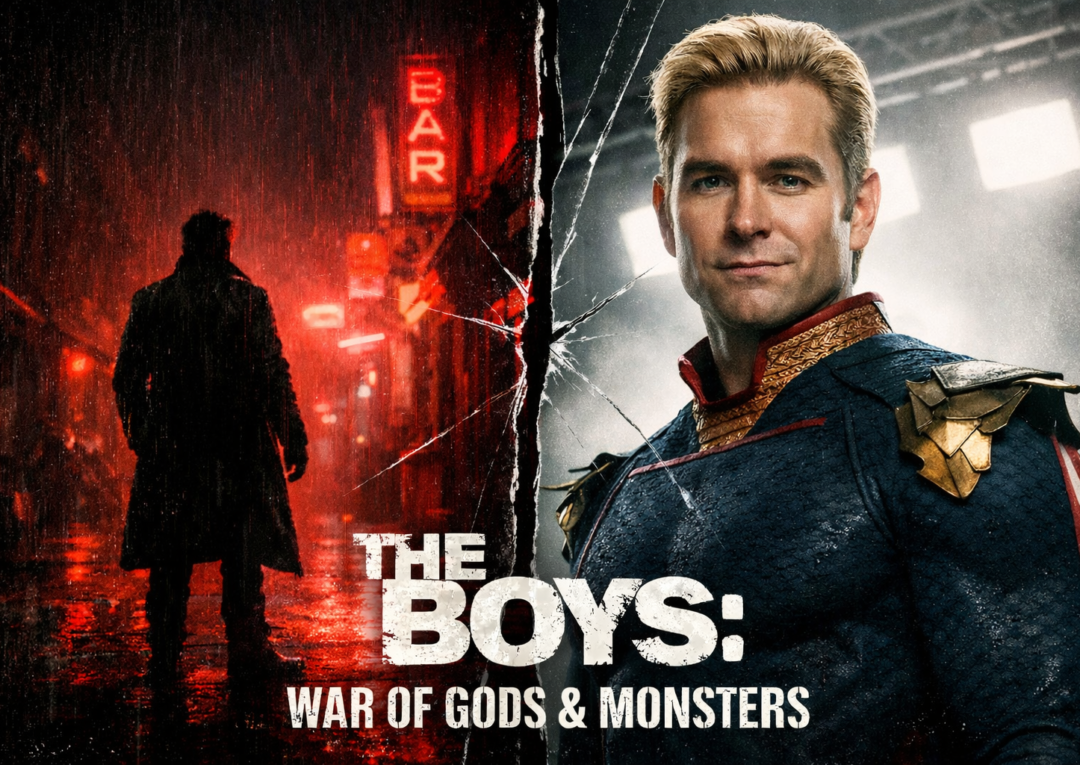
The Boys:
What Happens When
Heroes Go Bad
You’ve seen superhero movies. You’ve cheered for the guy in the cape. You’ve watched them save the world, get the girl, and walk away looking perfect. It all feels good. Clean. Safe.
The Boys takes that whole fantasy and tears it apart — slowly, brutally, and with zero apologies.
This isn’t a show about heroes saving the day. It’s a show about what superheroes would actually look like if they existed — drunk on power, owned by corporations, and absolutely terrifying. And somehow, it’s also one of the most entertaining things streaming right now.
What Is The Boys All About?
Let’s start from the beginning. The world in The Boys has superheroes — they’re called Supes. They have powers. They’re famous. People worship them like celebrities. Kids have their posters on walls. There’s even a superhero group called The Seven — basically this world’s version of the Avengers.
But here’s the thing. Behind all those smiles and press conferences? These Supes are deeply, disturbingly corrupt. They’re not fighting for justice. They’re fighting for brand deals, ratings, and power. And the company that manages them — Vought International — is just a mega-corporation that turns superheroes into a product.
Enter Billy Butcher. A rough, foul-mouthed British bloke with a personal vendetta against the most powerful superhero on the planet. He puts together a small crew of ordinary — very ordinary — people to take down these so-called heroes from the inside. No powers. No fancy suits. Just rage, strategy, and a whole lot of chaos.
🚨 The Setup in Three Lines
- Superheroes exist — but they’re violent, narcissistic, and controlled by a corporation
- A small group of powerless civilians decide to fight back against them
- Every episode escalates. Nothing is off limits. Nobody is safe.
Think of it as a superhero show where the heroes are the villains. And the “good guys” are people who’d lose a fight against a Tuesday morning.
Why It’s Different From Every Other Superhero Show
Look, there’s no shortage of superhero content right now. Marvel, DC, Netflix, you name it — there are dozens of shows about people with powers doing heroic things. So why does The Boys feel so completely different?
Because every other superhero show asks: “What if you had powers?” The Boys asks: “What if having powers made you the most dangerous, unaccountable person alive?” That’s a fundamentally different question — and the answer is genuinely unsettling.
🧠 It’s Brutal Without Being Gratuitous (Well, Mostly)
Yes, The Boys is graphic. Extremely graphic, sometimes. But the violence isn’t random shock value — it’s the point. When a Supe causes destruction, the camera doesn’t cut away like most superhero movies do. It stays. It shows you the cost. The collateral damage. The human beings who got in the way.
That discomfort is intentional. It’s making you feel something other superhero stories have trained you to skip past.
💼 It’s a Story About Corporate Power
Vought International — the company that runs the Supes — is just as terrifying as any individual villain. They do PR spins after catastrophes. They lobby politicians. They control public narratives. They manufacture heroism for profit.
Sound familiar? It should. The show is very deliberately holding a mirror up to how real industries — from media conglomerates to pharmaceutical companies — actually operate. And it’s uncomfortable how accurate it feels.
📺 It Never Lets the Heroes Feel Safe
In most shows, you always know the main characters will be okay. Not here. The Boys creates genuine dread. Characters you love get broken. People you hate get power. The show doesn’t play by the rules, and that keeps you completely glued to the screen.
“The Boys isn’t about superheroes. It’s about what unchecked power looks like when no one is watching.”
The show’s darkest, truest theme
Main Characters & Their Impact
The characters in The Boys are the real reason you keep coming back. They’re messy, broken, and wildly compelling. Here’s who you need to know:
What makes this cast special isn’t just their individual performances — it’s how they interact. Every relationship in the show is complicated. There’s no clean trust. No easy alliances. Even the people on the same side are capable of betraying each other.
That’s real. That’s human. And that’s why it hits harder than almost anything else in the genre.
Themes & Hidden Messages
On the surface, The Boys is a violent, jaw-dropping thriller about fighting superpowered monsters. But underneath all the chaos, it’s doing something much smarter. Every season is packed with ideas — about society, media, politics, and human nature. Here’s what the show is really saying:
Homelander is a superhero AND a celebrity, and the show blurs those two things constantly. People defend him no matter what he does — not because he’s right, but because they’ve built their identity around loving him. Sound familiar? That’s parasocial culture, just turned up to terrifying levels.
The central horror of the show isn’t any single Supe. It’s the system that protects them. Vought, politicians, lobbyists — everyone has an interest in making sure nothing sticks. The Boys is a show about what happens when powerful people are simply never held responsible for anything.
Every disaster in The Boys comes with a PR team and a rebranding strategy. Vought’s media machine can spin a mass casualty event into a marketing moment within hours. The show is acidic about how real-world media ecosystems work — how narratives get manufactured, and how truth becomes irrelevant.
The drug that creates Supes — Compound V — is controlled entirely by Vought. It’s their product, their IP, their leverage. The parallels to real pharmaceutical industries, to addiction, to who controls access to power — they’re all there, woven into every storyline.
Several male characters in the show are studies in what happens when men build their identity entirely around strength, dominance, or power — and then have that identity threatened. Billy Butcher and Homelander are almost mirror images of each other in this regard. The show doesn’t preach about it. It just shows you the wreckage.
Later seasons get into how ordinary people get radicalized — how fear, grievance, and a charismatic figure can turn someone from a normal human into a true believer. It’s some of the most topical content in the show, and it lands with a weight that purely fictional villains rarely achieve.
None of this feels like a lecture. The writers hide the critique inside the plot so naturally that you often only realise what the show was saying a few days later. That’s smart writing. That’s the mark of a show that genuinely trusts its audience.
Why Fans Absolutely Love It
The Boys built one of the most passionate, dedicated fanbases in streaming history — and for good reason. Here’s what keeps people obsessed season after season:
- Homelander is genuinely one of the greatest TV villains ever written. Every time he walks into a scene, something in your stomach tightens. You never know exactly what he’ll do — and Antony Starr makes it feel completely real. He won a Saturn Award. He should have won more.
- The show rewards re-watching. Background details, callbacks, foreshadowing — the writers pack every episode with things you miss the first time. The fanbase has built an entire culture around finding them.
- It never goes soft. Most shows with a passionate fanbase eventually start playing it safe. Not The Boys. Every season has at least one moment that made audiences genuinely put the screen down for a second and ask “Did they really just do that?”
- The political commentary hits real targets. Unlike a lot of “socially conscious” content that stays vague to avoid controversy, The Boys commits. That specificity has made it a genuine cultural conversation piece, not just entertainment.
- It gave us Frenchie and Kimiko. Amid all the brutality, the relationship between these two characters — Frenchie’s warmth, Kimiko’s quiet ferocity — is genuinely one of the sweetest dynamics on TV right now. The show earns that tenderness by never making it easy.
- It expanded into a whole universe. The spin-off Gen V — set in a college for young Supes — proved that the world of The Boys could sustain its own stories. More content is reportedly in development. The universe is growing.
“You’ll laugh. You’ll cringe. You’ll feel weirdly seen. And then you’ll immediately start the next episode.”
The The Boys experience, summarised
Should You Watch It?
If you’re already a fan of web series and pop culture — yes, without any hesitation. But let’s be real about what you’re signing up for.
✅ Watch It If…
- You’re bored of superhero stories where the heroes always win cleanly
- You like shows that are smart underneath the spectacle
- You can handle dark content — and we mean dark
- You want something that starts conversations, not just fills time
- You’ve been disappointed by a MCU or DC show recently and need something with bite
⚠️ Know Before You Go
- This show is not for younger viewers. It’s rated 18+ for very real reasons.
- The violence and mature content are frequent and sometimes extreme
- Season 1 takes an episode or two to settle — it’s worth pushing through
- You may feel an unexpected emotional attachment to characters you thought were irredeemable
The Boys isn’t trying to make you comfortable. It’s trying to make you think. That combination of entertainment and genuine provocation is rare on any screen — big or small — and that’s exactly what makes it worth your time.
The Boys Isn’t a Superhero Show.
It’s a Warning.
Here’s the thing nobody tells you before you start watching The Boys: you’ll go in thinking it’s just edgy superhero content. You’ll leave it thinking about real-world power, real-world media, and real-world accountability in a way that most “serious” prestige dramas never manage to trigger.
That’s the real trick of the show. It wraps genuinely important questions in spectacle so entertaining that you barely notice you’re being challenged. And by the time you do notice, you’re already five episodes deep and completely invested in people you probably shouldn’t root for.
Billy Butcher would hate being called a hero. Homelander would hate being called anything less than perfect. And somehow, watching both of them destroy each other and everything around them is the most compelling television experience Prime Video has produced.
Start from Season 1. Don’t skip anything. And maybe, just maybe, keep the lights on.
Now Streaming on Prime Video
4 Seasons Available