⚡ EV Review | May 2026
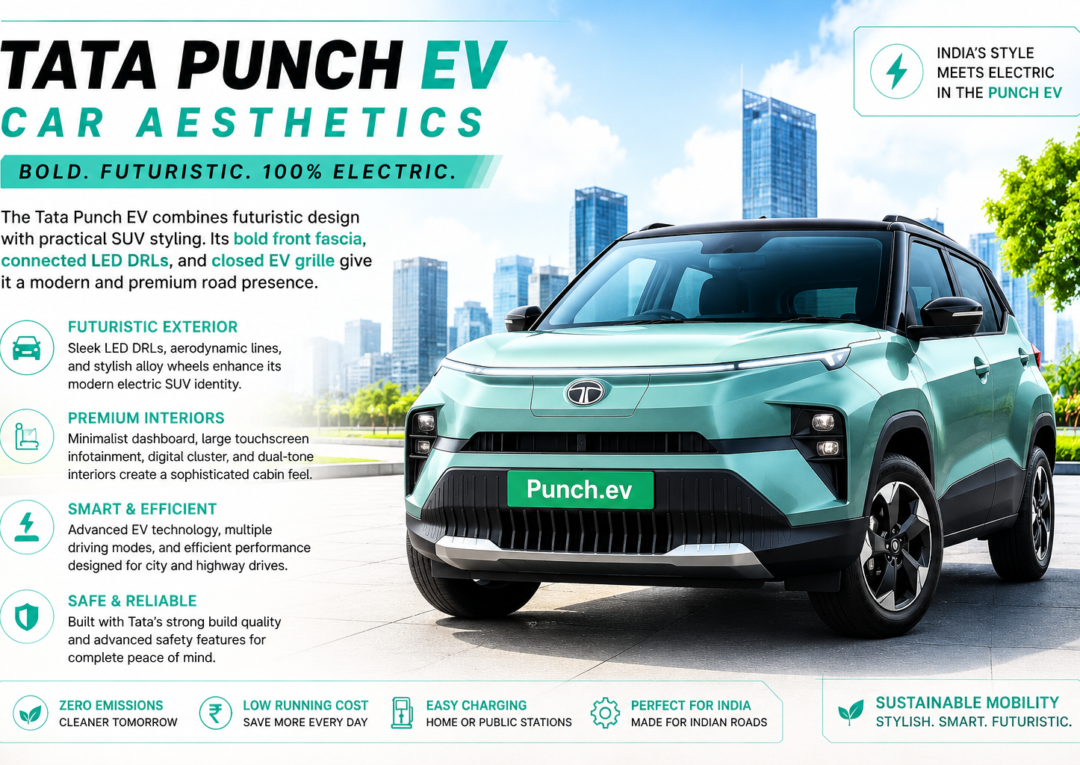
Tata Punch EV
2026 Review:
Still India’s
Best Bet?
Picture this. It’s Monday morning. You have a client meeting in Gurgaon and your charging anxiety is already playing on your mind. You glance at your Punch EV’s dashboard — 78% charge, 230 km estimated range. You breathe easy.
That’s the promise Tata made when the Punch EV first launched. And honestly? In 2026, they’ve mostly kept it. The 2026 update isn’t a full redesign — but the improvements are in exactly the right places. Better real-world range, a smarter cabin, and software that’s finally caught up to the hardware.
This isn’t a spec-sheet review. We drove it daily for three weeks — city traffic, highway runs, and one proper road trip. Here’s what actually matters, and who this car is really for.
The Story So Far — Why Punch EV Matters
When the Tata Punch EV launched in early 2024, it filled a gap nobody knew was that urgent — an affordable, practical electric SUV for real Indian families. Not just for early adopters with flat parking and home chargers, but for the person in a Tier 2 city who needs something reliable and won’t apologise for their budget.
Two years in, it’s become one of the best-selling EVs in India. That’s not an accident. Tata understood something that imported EV brands still struggle with — Indian buyers don’t want a concept car. They want something that makes sense on broken roads, in monsoon traffic, and on a family trip to Jaipur.
The Two Variants That Actually Matter
Tata sells the Punch EV in multiple trims, but the two worth your attention are the Medium Range (25 kWh) and the Long Range (35 kWh). The Standard Range trim is best for pure city use — short commutes, known charging infrastructure. The Long Range is where the car makes its case for everyone else.
Range & Charging — The Honest Test
We ran the Long Range variant across three different use patterns. Here’s exactly what we got.
Delhi NCR mixed traffic, AC on full, stop-start commuting. We averaged 290–310 km per full charge. Regenerative braking genuinely helps in bumper-to-bumper conditions. The car constantly feeds energy back on every slowdown — you’ll notice it on long stretches of light traffic.
Delhi to Agra, 200 km, mostly NH19 at 80–100 kmph. Returned ~260 km of range from a full charge — higher speed consumption is noticeable. But for this route? No stops needed. Range anxiety only kicks in above 250 km one-way stretches without fast chargers.
50 kW DC fast charger (Tata Power station, NH) took the Long Range from 20% to 80% in about 56 minutes. That’s a chai break + lunch stop. Not quite Tesla Supercharger speed — but for its price bracket, entirely acceptable. Home charging overnight from empty takes ~7–8 hours on 7.2 kW AC.
Thermal management has genuinely improved in 2026. In Delhi summer conditions (44°C ambient), range drop was ~8% versus mild weather — down from the ~14% drop users reported on 2024 models. Battery pre-conditioning via the app works well if you remember to use it before departure.
Taken on a Mussoorie weekend. Regenerative braking on descents was genuinely impressive — recovered noticeable charge on the way down. The climb consumed more than expected, but overall the trip worked comfortably with one charging stop at Dehradun. Not for Leh-Ladakh, but Mussoorie? Absolutely.
“The Punch EV doesn’t try to be a Tesla. It tries to be the most sensible electric car for the most number of Indians. In 2026, it’s winning that argument.”
IndiaThreads EV Desk — May 2026 Drive Review
Cabin, Tech & Daily Livability
Here’s where the 2026 update earns its keep. The cabin was already decent — but it felt slightly behind on the tech side compared to what rivals were offering. That gap has closed.
🔑 2026 Cabin Upgrades — What’s New
- 10.25″ Infotainment: Snappier processor, finally. The 2024 model had occasional lag that drove users mad. The 2026 version responds like a proper smartphone. Wireless Apple CarPlay and Android Auto are now standard from the mid variant upward.
- Instrument Cluster: Digital now on all but the base trim. Shows range, battery state, regen level, and tyre pressure in a clean layout. Not as premium as MG Windsor’s setup, but functional and readable in direct sunlight — which matters more.
- Ventilated Front Seats: Added on the top trim. This is not a luxury feature in India — it’s a basic human right in May-June heat. If you’re choosing between variants, this alone is worth the step-up.
- Sunroof: Present on Empowered+ variant. Adds to the airy feel of an already well-lit cabin. The headroom for rear passengers — always a Punch EV weak spot — hasn’t changed dramatically, but it’s not a dealbreaker for under-6-foot passengers.
- Software & Connectivity: ZConnect app has improved significantly. Remote climate pre-conditioning, charging schedule management, and real-time battery health are all reliable now. OTA software updates arrive every few months without the car needing a service visit.
- Boot Space: 366 litres — unchanged, and still competitive for this segment. A family of four can manage a weekend trip. The frunk (front trunk above the motor) adds a small but useful ~7 litres for cables and charging gear.
Ride & Drive Quality
The Punch EV drives better than the ICE Punch. That low centre of gravity from the floor-mounted battery makes a real difference in how the car feels through corners. It doesn’t roll or float — it tracks well.
The suspension revision for 2026 is noticeable. The car absorbed Gurugram’s broken service roads better than our previous test. It’s not luxury-car smooth, but it’s no longer jarring. At 80 kmph on highways, it’s genuinely planted and relaxed — refinement has improved.
Where It Still Lags
No car is perfect at this price. The Punch EV’s weaknesses are real and worth knowing.
- Rear seat space: Legroom is tight for adults over 5’10” on longer journeys. Fine for kids and shorter passengers, but a genuine constraint if you’re regularly ferrying tall adults.
- Charging speed ceiling: 50 kW DC maximum means it can’t leverage the newer 60–150 kW fast chargers appearing on Indian highways. Rivals like Tata Curvv EV and MG ZS EV handle higher charge rates.
- No V2L (Vehicle-to-Load): Can’t use it as a power backup during cuts. Some competitors at similar prices now offer this. It’s a miss for markets where power cuts are a daily reality.
- Sound insulation: Wind noise above 90 kmph is more prominent than you’d expect. Not terrible, but noticeable on highway cruises with light music.
The Verdict Table — Who Should Buy?
| Buyer Profile | Verdict | Reason |
|---|---|---|
| Daily city commuter (under 60 km/day) | ✅ Strong Buy | Medium Range is more than sufficient. Charging costs vs petrol savings are dramatic. |
| Professionals needing weekend travel | ✅ Buy (Long Range) | 290+ km real range handles most weekend destinations. Charging infra is improving. |
| Families with 4+ adults, long trips | ⚠️ Consider Alternatives | Rear space and charging speed may frustrate. Look at Tata Nexon EV or Curvv EV. |
| First EV buyer, budget under ₹12L | ✅ Best-in-class | Nothing else at this price point offers this build quality, safety, and ecosystem. |
| Highway-heavy user (200+ km daily) | ⚠️ Marginal | Range is workable but charging infrastructure gaps can cause anxiety on less-covered routes. |
Vs The Competition — 2026 Landscape
The compact EV space has gotten more competitive. Here’s how the Punch EV stands against what you might actually be cross-shopping.
- Tata Nexon EV (₹14.49L onwards): More space, better charging speed, slightly more premium cabin. But significantly pricier. If you can stretch the budget and need the extra room, it’s worth it. If you’re price-conscious, the Punch EV’s value is hard to beat.
- MG Windsor EV (₹13.5L onwards): Excellent tech, larger screen, V2L feature, bigger battery. But MG’s service network and resale value still trail Tata’s. For tech-first buyers, it’s a genuine rival. For value and reliability, Punch EV holds its own.
- Citroën eC3 (₹11.5L onwards): Cheaper, but you notice where the savings come from — smaller battery, limited features, narrower charging network. The Punch EV is worth the premium over this.
- Tata Curvv EV (₹17.49L onwards): A league above in size and premium feel. If you have the budget, it’s the better car. But at that price, you’re in a different conversation.
Final Charge:
It Earned Its Place.
And in that very specific, very important goal? It succeeds. The 2026 updates fix the most complained-about issues from the 2024 model. The software is better. The thermal management is better. The ride is better.
For a daily professional commute, for a young family’s first EV, for someone in a growing city who wants to stop thinking about petrol prices — this is the benchmark at this price point. Until something meaningfully better arrives under ₹14 lakh with similar build quality and after-sales support, the Punch EV holds its ground firmly.
The charging network is expanding. Battery costs are falling. And the Punch EV is already positioned exactly where India’s EV transition is heading. That’s not just good product timing. That’s smart.
EV Review — May 2026