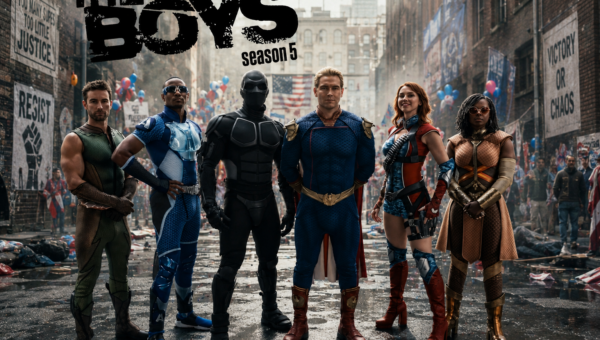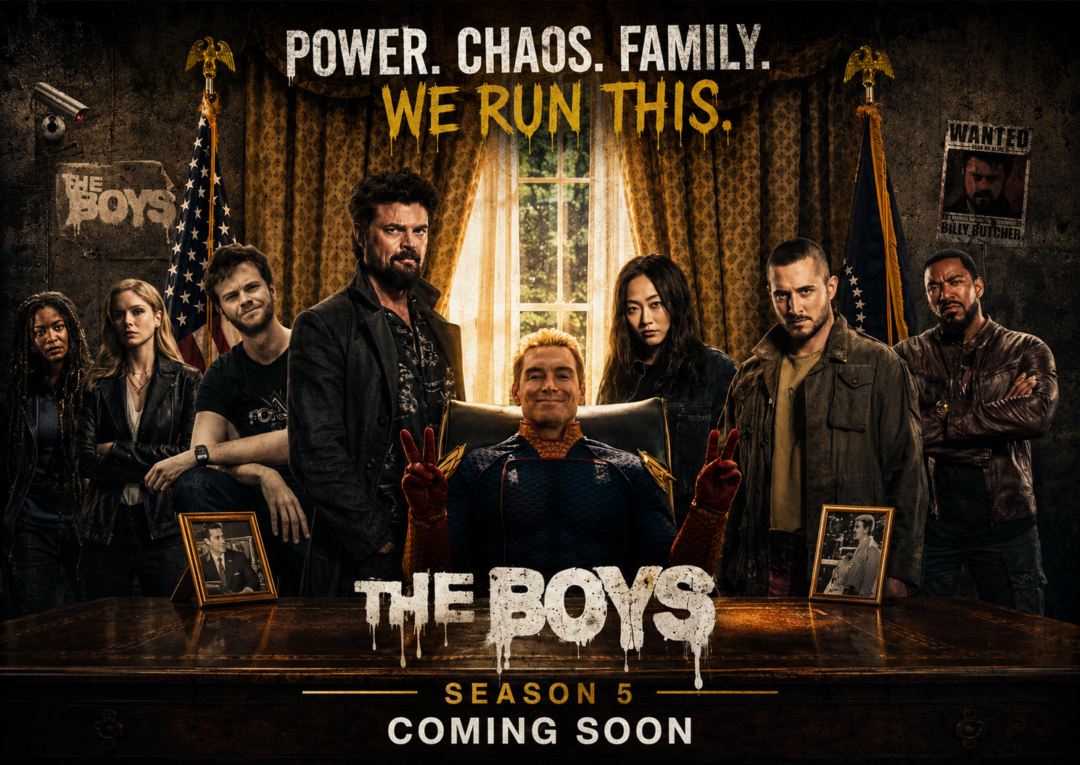
📺 TV Breakdown | Series Finale 2025
The Boys is Finally
Over.
Nothing Was
The Same.
There are shows that end. And then there are shows that detonate. The Boys was always the second kind — loud, ugly, uncompromising, and weirdly honest about a world that worships power and calls it heroism.
When the finale credits rolled, fans weren’t just watching a TV show finish. They were watching a five-season argument finally reach its verdict. The Boys never cared about being comfortable. It cared about being right. And in the end, it was.
This is the full breakdown — the finale’s biggest moments, what happened to everyone we followed for years, and why this show will be studied, rewatched, and quoted long after every other superhero project from this era has been quietly forgotten.
Before We Get Into the Finale — Why This Show Was Different
When The Boys first arrived on Amazon Prime in 2019, most people assumed it was just another “superheroes but dark” concept. There had been others. Watchmen did it in the comics. Kick-Ass tried it on film. But The Boys wasn’t interested in being edgy for shock value — it had something more uncomfortable in mind.
It was a show about what happens when power is completely unchecked. When corporations own heroes. When governments are too weak or too cowardly to stop them. When the people who are supposed to protect you are actually the most dangerous thing in your world.
Creator Eric Kripke and his writers never softened that edge. Season after season, the show escalated — not just in violence, but in how directly it was willing to name the things it was critiquing. By the final season, there was no metaphor left. It was just the thing itself, staring back at you.
The Setup Heading Into the Final Season
Going into the fifth and final season, the world of The Boys was genuinely broken. Homelander had consolidated power in a way that felt like a slow-motion coup. Victoria Neuman was one step from the White House. Compound V had leaked into the population. And Billy Butcher — the show’s furious, self-destructive heart — was dying.
The cards were stacked against our people. Every clever plan had already been tried. Every institution had already been corrupted or destroyed. The final season had to answer a question the show had been building to for years: how do ordinary people — genuinely outgunned, outresourced, and outmatched — beat someone who can melt your face with his eyes?
The Finale, Moment by Moment
The Boys finale was never going to be a clean, triumphant Hollywood ending. That would have been a betrayal of everything the show stood for. What we got instead was messier, sadder, and somehow more satisfying — because it was honest.
The show’s greatest villain didn’t get a redemption arc. He didn’t get a hero’s death or a meaningful last speech. His end was deliberately unsatisfying — and that was the point. Homelander died as he lived: in denial, still performing for a crowd that had finally stopped clapping. Antony Starr’s final minutes of screen time were some of the most quietly devastating of his entire run.
Billy Butcher’s arc was always about one thing: what do you do with rage when revenge isn’t enough? His finale moment wasn’t triumphant — it was the most human thing the show had ever done. Karl Urban played it without a single false note. Butcher finally chose something over his anger, and it cost him everything. The show earned that moment across five seasons.
Annie January spent the entire series being the show’s moral compass while everyone else compromised themselves into the dirt. The finale gave her something better than a victory — it gave her a choice. And she made the right one without anyone asking her to. Erin Moriarty played it perfectly. Starlight didn’t save the world because she had to. She did it because she’s just built that way.
The show’s central question — what would actually stop a corporation with superpowers — got its answer in the finale. It wasn’t a bigger weapon. It wasn’t a military solution. The answer was messier and more political than that, which felt right. Institutions don’t fall because someone punches them. They fall when enough people stop believing the lie.
The Deep — possibly TV’s greatest comedic punching bag — got the ending he deserved: completely irrelevant. He spent the whole series trying to matter, trying to be taken seriously, trying to reclaim some version of dignity. The finale’s treatment of him was almost sympathetic in how perfectly it understood him. He didn’t even get to be the villain. He was just… sad.
Of all the character arcs in the final season, A-Train’s was the quietest and maybe the most complete. His journey from willing corporate asset to something approaching a conscience was never straightforward. The finale didn’t redeem him cheaply — it just showed us someone who finally understood what he’d been running from. Small moment, huge payoff.
“The Boys didn’t want you to feel good at the end. It wanted you to feel true.”
IndiaThreads TV Analysis, 2025
What The Finale Actually Said
The Boys was always a show with a thesis. Not a subtle one, either — it wore its argument on its sleeve, soaked in blood, and dared you to disagree. The finale was the final paragraph of that argument, and it came down to something surprisingly simple.
Power Doesn’t Fix Itself
The central insight of The Boys — the thing it never stopped saying across five seasons — is that power structures don’t self-correct. They don’t suddenly develop a conscience. They don’t get embarrassed into reform. The only thing that changes them is sustained, painful, costly pressure from people who refuse to look away.
That’s why the finale’s solution wasn’t a superhero punch or a magic weapon. It was a coalition of people — broken, scared, compromised people — refusing to stop. That’s not a satisfying action-movie ending. But it’s true. And The Boys always preferred true over satisfying.
The Homelander Mirror
The show’s single greatest achievement was Antony Starr’s Homelander — one of the most complete villain portraits in television history. Not because he was evil in some exotic, operatic way. But because he was recognisable. The neediness beneath the rage. The violence that came from insecurity rather than malice. The way he performed strength for an audience that rewarded him for it.
🔑 What Made Homelander Genuinely Scary
- He wasn’t the problem — he was the symptom. Vought created him, shaped him, monetised him. His monstrous behaviour was the natural endpoint of a system that elevated him without ever holding him accountable.
- He needed to be loved more than he needed to win. That neediness was the crack in the armour — and the show never stopped exploiting it.
- The crowds who cheered him. The show was always more disturbed by the people who applauded Homelander than by Homelander himself. The finale had something to say about that too.
- Antony Starr gave the performance of his career. There are scenes — the milk scene, the balcony scene, the final act — that belong in any serious conversation about great TV acting. Full stop.
Butcher Was Always the Point
People spent years debating whether Billy Butcher was the hero or the villain of The Boys. The show’s answer, delivered in the finale, was: both, and that’s exactly the point.
Butcher’s rage was legitimate. His methods were not. The show never excused him for that — but it also never stopped being honest about where his rage came from. His ending wasn’t punishment or reward. It was consequence. Real consequence, the kind that doesn’t feel clean and doesn’t come with a music swell.
Karl Urban deserved every award conversation he was part of. Butcher is one of TV’s great characters — flawed, furious, and ultimately more interesting than any “pure hero” the show could have given us.
The Legacy:
Why This Show Mattered
The Boys ran for five seasons and never — not once — stopped swinging. That’s rare. Shows get tired. Writers get cautious. Studios get nervous about alienating audiences. Somehow, The Boys never blinked.
What It Changed About Superhero Stories
- It asked the question everyone else avoided: What does a superhero actually look like in a real political economy? The answer — a corporate asset, a weapon, a celebrity brand — was uncomfortable enough to be genuinely provocative.
- It proved audiences could handle complexity: The Boys had no clean heroes. Every character was compromised. Audiences didn’t abandon it for that — they rewarded it. That matters for what gets greenlit next.
- It made superhero fatigue a feature, not a bug: By leaning into the exhaustion with sanitised cape stories, it found an audience that felt seen. That audience was enormous.
- It gave satire real teeth: The show’s political commentary was never subtle, but it was always specific. It named things. That takes nerve. Most shows don’t have it.
- It reminded TV that violence has consequences: Not just physical ones — psychological, moral, relational ones. Characters in The Boys carried the weight of what they did. That’s unusual in genre TV and it made every stakes moment feel genuinely serious.
The Performances That Will Be Remembered
Beyond the writing and the satire, The Boys will be remembered for a set of performances that simply shouldn’t have been possible in a show about exploding superheroes.
Antony Starr turned Homelander into one of the most studied villain performances on television. Karl Urban made Butcher a leading man out of pure force of personality. Erin Moriarty’s Starlight was the show’s emotional anchor across five years. And Jack Quaid — often overlooked in the discussion — gave Hughie one of the quietest, most complete character journeys in the whole run.
The Show Ranked:
Season by Season
Five seasons. Not all of them hit the same. Here’s the honest ranking, now that we have the full picture.
- Season 1 — The Perfect Introduction: Lean, fast, and genuinely shocking. The show announced itself without apology. Still one of the tightest first seasons in recent memory.
- Season 2 — The Expansion: Deeper on character, bigger on satire, introduced Stormfront as one of the show’s most effectively terrifying additions. Slightly uneven in places but still excellent.
- Season 3 — The Peak: “Herogasm” alone made this season notorious. But the deeper achievement was Ryan’s arc, Soldier Boy’s introduction, and Butcher’s moral collapse. The show at full power.
- Season 4 — The Long Setup: Felt at times like table-setting for the finale, which it was. Some brilliant individual moments but the weakest season overall in terms of momentum.
- Season 5 — The Landing: Delivered on five years of promises. Not perfect — what finale season ever is? But honest, courageous, and completely committed to its own logic. A worthy ending.
Final Read:
The Boys Told the Truth.
The Boys was a product too — it ran on Amazon Prime, it had a marketing budget, it sold merchandise. But it also had a point. It was genuinely, stubbornly, sometimes obnoxiously honest about what it was saying. It didn’t soften the satire when it became too pointed. It didn’t rescue its villain for commercial reasons. It didn’t give its audience the ending they wanted — it gave them the ending that was true.
That’s not common. It might even be rare enough to be precious. We spent five seasons with Billy Butcher’s fury, Annie January’s hope, Homelander’s terrifying brokenness, and a world that kept looking the other way. The finale didn’t fix that world. It just showed us people who refused to accept it.
In a genre that keeps trying to make you feel invincible, The Boys kept reminding you that you’re not — and that showing up anyway is the only thing that’s ever actually mattered. That’s a legacy worth having. Oi. What a show.
TV Analysis — 2026