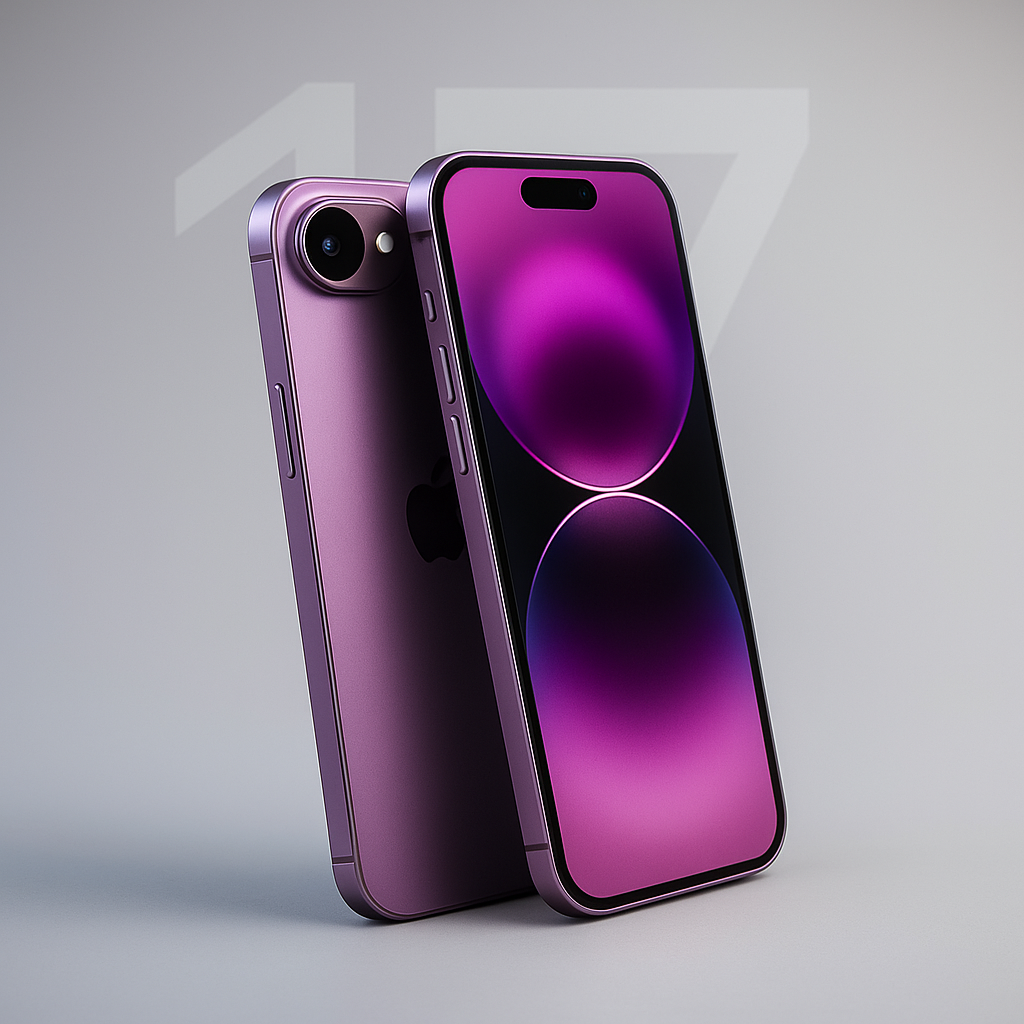
📱 Tech Intelligence | May 2026
iPhone 17:
Everything
You Need
to Know.
Let’s be honest — every year the tech world asks: is this iPhone actually worth it? This time, the answer is genuinely interesting. The iPhone 17 isn’t just a small bump. Apple made some real decisions in 2025 — some bold, some that’ll make you raise an eyebrow.
Four new iPhones launched on September 19, 2025: the iPhone 17, the impossibly thin iPhone Air, the iPhone 17 Pro, and the iPhone 17 Pro Max. Each one is a different bet on what you care about most. And understanding the differences — really understanding them — is the only way to figure out which one belongs in your pocket.
Whether you’re upgrading from a 15, finally leaving Android, or just curious what Apple’s been cooking — this is your complete guide. No jargon overload. No filler. Just the stuff that actually matters.
The Lineup: Four iPhones, Four Stories
Apple didn’t just refresh its phones this year — it actually reshuffled the lineup. The Plus model is gone. In its place: the iPhone Air, which is a completely new category for Apple. That alone makes 2025 interesting.
Here’s how the family breaks down, and why each model tells a different story about what Apple thinks you want.
iPhone 17e — From $599. The value option. A19 chip, 2-in-1 camera. Released March 2026.
iPhone 17 — From $799. The base flagship. Bigger 6.3″ display, 120Hz ProMotion, upgraded cameras. Double the storage vs last year.
iPhone Air — From $999. The design statement. 5.6mm thin. Single rear camera. Same A19 Pro chip as the Pros.
iPhone 17 Pro — From $1,099. The power user’s pick. Triple 48MP cameras, 8x optical zoom, new aluminum unibody design.
iPhone 17 Pro Max — From $1,199. The best iPhone Apple has ever made. Record battery life. Every camera upgrade you can imagine.
The Biggest Surprise: iPhone Air
Nobody expected Apple to actually kill the Plus. But the Air is here, and it’s a statement piece. At just 5.6mm thick — thinner than anything Apple has made since the original iPhone 6’s 6.9mm — this is the phone for people who want to feel something in their hand that doesn’t feel like a brick.
The trade-off is real though: you’re getting a single rear camera. No ultrawide. No telephoto. Just one very good lens and one very thin chassis. That’s a design choice, not an accident — and it’ll divide opinion sharply.
Display: ProMotion Finally Comes to Everyone
This was the single most-requested upgrade from regular iPhone users for years. ProMotion — the 120Hz adaptive refresh rate that makes scrolling feel silky-smooth — was always locked to the Pro models. Not anymore.
The iPhone 17 base model gets it. Always-On Display too. That’s a huge deal if you’re coming from an iPhone 15 or 16 and wondering what you were missing every time you used a friend’s Pro.
The screen is also slightly bigger now — up from 6.1 inches on the iPhone 16. It doesn’t sound like much, but going from 6.1 to 6.3 inches while keeping the phone roughly the same physical size (thanks to thinner bezels) is actually noticeable in daily use. Text is more comfortable. Media feels more immersive.
For the Pro models, the display story is more of the same but refined — still the best panels Apple puts in a phone, just getting marginally sharper and brighter with each cycle.
The A19 Chip — And Why It Actually Matters
Every year Apple announces a new chip and every year someone says “but is it really that much faster?” For the A19 and A19 Pro, here’s the honest answer: yes and no, depending on which category you care about.
The standard A19 powering the iPhone 17 and iPhone Air is around 20% faster in raw performance than last year’s A18. In day-to-day use — opening apps, scrolling, FaceTime — you probably won’t feel that. Where it matters: gaming, heavy multitasking, and AI processing.
⚡ A19 Pro — What’s Different for the Pro Models
- New vapor chamber cooling system — Apple laser-welds it into the aluminum chassis. The A19 Pro can sustain higher performance for longer without throttling. Tests show 40% better sustained performance vs A18 Pro.
- Better thermal management — The aluminum unibody isn’t just a design choice. It distributes heat across the entire chassis, which means the phone stays cooler during demanding tasks like 4K Pro Res video recording.
- Apple Intelligence processing — The on-device AI model runs entirely on-device for most tasks. That means faster responses, better privacy, and no need for an internet connection for core features.
- Gaming performance leap — Apple positions the Pro as a genuine gaming device now. With AAA games already on the App Store, the GPU improvements in A19 Pro are one of the more tangible real-world upgrades.
The iPhone Air is interesting here — it gets the A19 Pro chip despite being the second-cheapest model in the lineup. Apple made that call because a phone that thin needs to be efficient, and the Pro chip runs cooler under sustained load. It’s a smart engineering decision, even if it feels unusual.
Cameras: 48MP Across the Board
Camera upgrades are where Apple earns its money with most buyers. The 2025 story has a clear headline: every model in the lineup now shoots at 48MP. Even the ultrawide on the base iPhone 17 — previously a lower-resolution lens — has been bumped up.
48MP main + 48MP ultrawide. New 18MP Center Stage front camera. This is a meaningful upgrade from the 16 — especially the ultrawide, which now produces usable shots in low light. Center Stage on the selfie camera tracks you as you move, which is genuinely useful on video calls and content creation.
Three 48MP cameras — main, ultrawide, and the new telephoto. The telephoto now reaches 8x optical-quality zoom, the longest ever on an iPhone. Equivalent to eight lenses in one device. For photographers, this is a real jump — the previous 5x zoom was good, 8x is genuinely useful for events, sports, and candid shots.
The Pro models shoot 4K Log Pro Res video. That’s professional filmmaker territory. Combined with the improved thermal management, you can record long sessions without the phone killing the quality mid-shoot. CNN tested it at a live event — 20+ minutes of 4K Pro Res and barely a dent in the battery.
The 18MP selfie camera with Center Stage is across the whole lineup. It tracks your face as you move — useful for FaceTime, video calls, and social content. The upgrade from the 12MP camera is visible in detail and low-light performance. Portrait selfies in particular look noticeably sharper.
One rear camera. That’s the Air’s compromise. But it’s a very good one — 48MP main lens with the A19 Pro’s computational photography doing heavy lifting. You’re not getting zoom or ultrawide, but everyday photos and portraits are excellent. Know the trade-off before you buy.
Apple Intelligence now actively assists in photo processing. Visual Intelligence lets you point your camera at anything and get information about it. Low-light performance across all models has improved thanks to bigger sensors and better computational processing — not just more megapixels.
“After testing over a thousand photos, this is one of the best smartphone cameras ever built.”
CNN Underscored — iPhone 17 Pro Max Review
Battery Life: Apple’s Biggest Leap Yet
Battery life is the thing most people actually care about, and this year Apple finally nailed it — at least on the Pro Max. The iPhone 17 Pro Max logged 21 hours and 44 minutes in continuous 4K video looping tests. That’s the best battery performance ever recorded in any iPhone. By more than an hour over the 16 Pro Max.
Real-world use is even more telling. Reviewers used the 17 Pro Max as their daily driver for months and consistently finished days with charge left over. Heavy users — lots of camera use, cellular streaming, social media — were seeing 15+ hours of active screen-on time.
The eSIM Advantage — More Battery
Here’s one detail most people miss: eSIM-only models of the iPhone 17 Pro and Pro Max have a slightly larger battery. Apple used the space previously occupied by the physical SIM slot to fit more battery cells. The result is two additional hours of video playback over physical SIM models. If you’re in a market where eSIM works well, this is genuinely worth considering.
The base iPhone 17 and Air have good battery life too — improved over their predecessors — but they don’t hit the same heights as the Pro Max. If battery life is your top priority and you’re willing to pay for it, the Pro Max is the clear answer.
iOS 26 & Apple Intelligence
Every iPhone 17 ships with iOS 26 — and this is a bigger software moment than Apple usually delivers. The new design language, called Liquid Glass, makes the entire interface feel different. Transparent elements, fluid animations, a lock screen that adapts to your photos. It’s genuinely striking, even if some users found it a bit polarizing at first.
Reviews describe the lock screen as almost magical — the clock resizes around your wallpaper, and there’s an AI-driven 3D effect when you rotate between photos. It sounds like a gimmick, but reviewers keep bringing it up as something they show off to people.
Live Translation: Real-time translation in Messages, FaceTime, and Phone calls. Works across languages, on-device.
Visual Intelligence: Point your camera at anything — a restaurant, a plant, a product — and get information. Similar to Google Lens but built into the camera system.
Writing Tools: Summarize, rewrite, and proofread anywhere you type.
Call & Message Screening: AI screens calls and messages so you only see what matters. Useful for filtering spam without missing anything important.
On-Device Processing: Core features work offline. No data sent to servers for most tasks. Apple’s privacy-first approach is a genuine differentiator here.
The honest caveat: Siri still isn’t dramatically smarter. Reviewers across the board noted that Siri improvements — long promised — haven’t arrived in a meaningful way yet. Apple Intelligence’s other features are well-designed. Siri specifically remains a work in progress. That’s a gap Apple will need to close.
Pricing & Which Model Should You Buy
Apple kept prices largely flat compared to 2025 — with one exception. The Pro went up slightly. But the base iPhone 17 holds at $799 while doubling storage to 256GB. That’s genuinely good value compared to last year’s 128GB starting point.
For Most People — iPhone 17 Base
- $799 with 256GB base storage — you’re not paying for a cramped phone anymore
- ProMotion 120Hz is finally here — this was the main reason to go Pro before
- Cameras are genuinely excellent for everyday use and social content
- If you’re on an iPhone 13 or older, this is a massive jump — feel it immediately
For Design-First Buyers — iPhone Air
- $999 — you’re paying the Air premium for design and thinness
- A19 Pro chip is surprisingly powerful for the form factor
- Single camera is the real trade-off — if you shoot a lot of video or zoom shots, this stings
- Ideal for: people who hate thick phones and don’t care about camera versatility
For Professionals & Power Users — iPhone 17 Pro Max
- $1,199 — the top of Apple’s lineup, and it earns it
- Best battery life ever in an iPhone — by a meaningful margin
- Triple 48MP cameras with 8x optical zoom — the photography and video case is undeniable
- Worth it if you use your phone as a creative tool, not just a communication device
iPhone 17 in India — What to Know
For Indian buyers, a few specifics matter. iPhones are assembled in India now — Apple has been expanding its manufacturing presence with Foxconn and Tata, and iPhone 17 models continue that trend. What that means practically: slightly more stable pricing and potentially faster availability on some configurations.
The pricing in India will track above US rates due to import duties and GST on the remaining import component. Expect the base iPhone 17 to land in the ₹79,900–₹84,900 range, with the Pro Max at the top of the lineup sitting well above ₹1,30,000 depending on storage configuration.
Apple Intelligence features including Live Translation are expanding language support, but Hindi and other Indian languages are still in rollout phase for the more advanced AI features. Core functions work fine — the expanded language AI is coming but not fully there yet.
Final Read:
This Is the iPhone You’ve Been Waiting For.
Apple finally brought ProMotion to the base model. Doubled the base storage without raising the price. Built the thinnest iPhone ever. And delivered the best battery life in iPhone history on the Pro Max. That’s a lot of real wins in one lineup.
The weak points are real too: Siri still needs work, the Air’s single camera is a genuine compromise, and the Pro’s price increase stings. These aren’t dealbreakers — but they’re worth knowing before you walk into an Apple Store.
No new iPhone 18 is coming in 2026 for the base model — just Pro and a rumoured Fold. So if you’re in the market this year, the iPhone 17 lineup is what you’re working with. And honestly? It’s a very good hand to be dealt.
Tech Analysis — May 2026



[…] this blog, we’ll break down everything you need to know about the iPhone 17 series—from hardware upgrades and AI advancements to iOS 19 updates and cybersecurity improvements. […]