🎨 Culture & Fashion | May 2026
The “Costume Art”
Statement:
Met Gala
2026.
Every year, the first Monday in May stops the internet. The Met Gala rolls in, drops a theme, and suddenly everyone — from fashion editors to your most stylish Instagram follow — has very strong opinions.
The 2026 Met Gala theme is “Costume Institute: Fashion Is Art” — with the dress code simply listed as “Costume Art.” And it might be the most intellectually charged brief the Gala has issued in years. It’s not just telling celebrities to dress up. It’s making a deliberate statement: that what you wear to a party can be as considered, as intentional, and as meaningful as what hangs in a museum.
This isn’t about extravagance for its own sake. It’s a provocation. One that forces everyone in that room — and the hundreds of millions watching — to sit with a real question. Is fashion actually art? Or is it just very expensive clothing with better PR?
What “Fashion Is Art” Actually Means This Time
The Costume Institute at the Metropolitan Museum of Art has been making this argument for decades — quietly, through exhibitions and carefully preserved garments. In 2026, it’s saying it loudly on the most watched red carpet in the world.
“Fashion Is Art” as a dress code isn’t just a vibe. It’s an instruction. Come dressed not just to impress, but to express. Think of your outfit as a piece of work. Consider what it communicates, what craft went into it, what it says about this specific moment in culture.
There’s a timing dimension here too. The fashion world has been fighting for legitimacy in the fine art space for years. Virgil Abloh talked about it constantly. Rei Kawakubo built a career on it. Now the Met — the institution — is officially cosigning the argument. That matters.
Why This Theme Lands Differently in 2026
We’re in a strange cultural moment. AI-generated images look like fashion. Fast fashion floods every platform. And simultaneously, handmade craft and archival couture have never felt more precious — or more endangered.
The “Fashion Is Art” theme arrives at exactly this tension. It’s a counterstatement to the disposability of modern dressing. It says: slow down, look closer, this took time, this matters.
How Stars Will Actually Interpret This
Every year, the Met Gala splits into roughly three camps: those who fully commit to the theme, those who vaguely gesture toward it, and those who seem to have skipped the brief entirely. With “Costume Art” as the dress code, that split is going to be more visible than ever.
The most literal interpretation — outfits that function as three-dimensional art objects. Think structured headpieces that reference architecture, gowns with sculptural silhouettes, pieces that look like they belong in a gallery before they belong on a body. Schiaparelli, Valentino, and Comme des Garçons were built for exactly this brief.
Hand-painted fabrics, garments that reference specific artworks or art movements, embroidered pieces that take ateliers months to complete. This interpretation leans into the craft argument — that the hours of human labour in haute couture are equivalent to any studio artist’s practice. The comparison isn’t metaphorical. It’s factual.
The “Costume Art” dress code also invites a theatrical reading — where the garment tells a story or embodies a persona. Think 2019 Camp energy, but grounded in a specific artistic narrative. Who are you when you wear this? What does this costume say about identity, performance, and what it means to be seen?
Some designers will foreground process over product — a gown where the visible seams are the point, a suit where the construction technique is what makes it radical. This interpretation makes a statement about the invisible labour in fashion — the artisans and ateliers whose hands never appear on the red carpet.
2026 will almost certainly produce looks that blur the line between physical garment and digital art — pieces with embedded tech, colour-changing materials, silhouettes that reference the digital-native aesthetic defining mid-2020s visual culture. The most divisive interpretation on the night. Guaranteed.
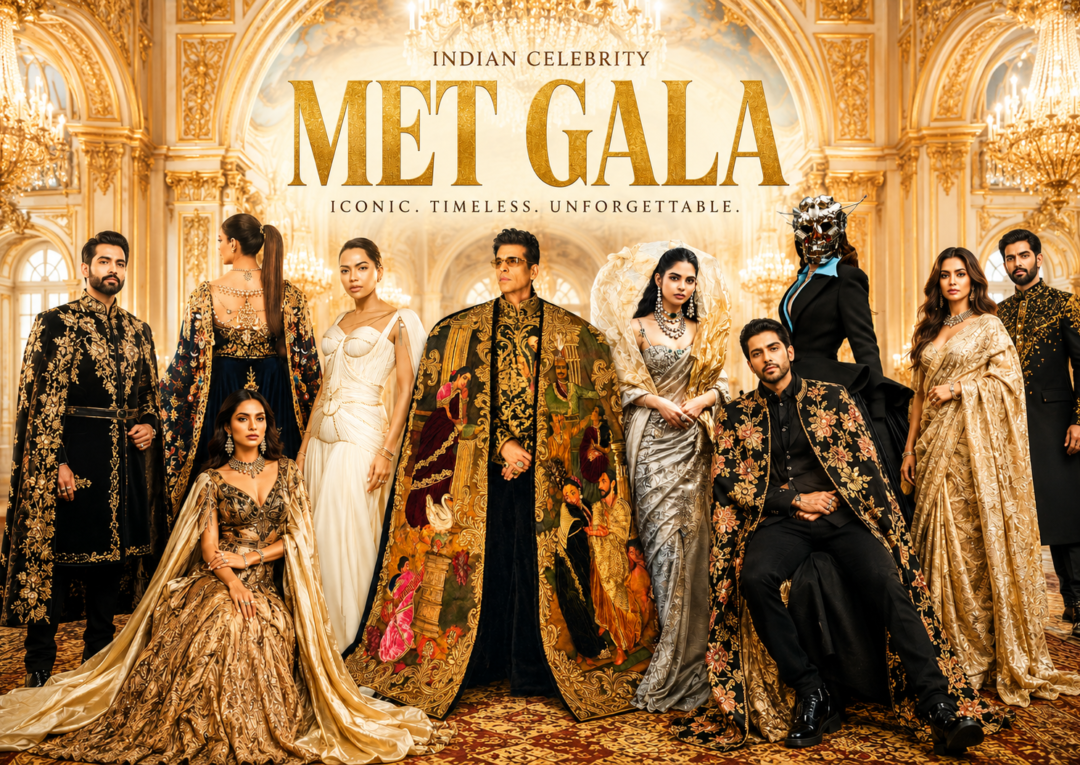
With India’s fashion moment accelerating globally, Indian designers and celebrities are positioned to make a real statement here. Zardozi embroidery, Banarasi silk, hand-block print traditions — these are centuries-old art forms that fit the “Costume Art” brief perfectly. The 2026 Gala could be a genuinely significant moment for Indian craft.
“Fashion isn’t trying to be art. It always was. The Met Gala just finally said it out loud.”
Fashion Culture Desk — May 2026 Perspective
The Real Questions This Theme Forces
The “Fashion Is Art” theme doesn’t just inspire outfits — it reopens a debate that the art world has been reluctant to fully settle. In 2026, that debate has new stakes.
🔑 What “Costume Art” Is Really Asking
- Is fashion too commercial to be art? The classic objection. Art exists outside the market, goes the argument — fashion exists entirely within it. But plenty of fine art is sold for millions. Plenty of fashion is never sold at all. The commercial objection has always been shakier than it sounds.
- What separates costume from clothing? The dress code says “Costume Art” — not just fashion. Costume implies transformation, character, deliberate intention. It’s a more honest word in some ways. All dressing is costuming. The Met Gala is just being explicit about it this year.
- Who gets to define what counts as art? The Costume Institute exists partly to answer this question — and has been answering it for over 75 years. But putting the argument on the Met steps democratises the conversation in a way a gallery never quite can.
- Does the body change the work? A painting doesn’t move. A sculpture doesn’t breathe. A garment worn by a person becomes something different with every step, every gesture, every interaction. Is that a limitation — or is it actually the whole point?
- What happens when AI makes fashion? The genuinely new question in 2026. When AI generates a couture visual in seconds, what makes the hand-stitched version art? The Costume Institute’s answer seems to be: the human process. The time. The intention. The irreducible craft that no algorithm replicates.
The Met Gala Timeline — How We Got Here
What to Actually Watch For on the Night
For Fashion Lovers
- Watch the couture houses, not just the stylists: The looks that define this theme will be designer-led — not celebrity-and-stylist-picked-something-pretty. Look for Schiaparelli, Valentino, Comme des Garçons, Rick Owens, and the Indian houses that have been building toward this moment for years.
- Indian craft will be a story: Several Indian celebrities and the growing global presence of Indian fashion houses means 2026 could produce genuinely iconic moments that centre non-Western craft traditions as high art. Watch this space closely.
- The “miss” looks will be revealing: Anyone who shows up in a regular gown with no conceptual intent is saying something — just not what they intended. With a theme this loaded, looks that ignore the brief read as conspicuous, not safe.
For Culture Watchers
- This is a conversation about value: In an era of fast fashion and AI-generated visuals, the Met is making a case for the handmade, the considered, the time-intensive. That’s a cultural argument with economic and ethical dimensions — not just an aesthetic preference.
- The exhibition matters as much as the red carpet: The Costume Institute show running alongside the Gala is the actual intellectual substance. The red carpet is how it gets attention. The exhibition is the argument. Both are worth following.
- Social media will shape what “wins”: In 2026, the most-shared look isn’t necessarily the most thoughtful one. The tension between virality and genuine artistic engagement will be visible in real time on those steps. That tension is itself worth paying attention to.
Three Scenarios for the Night
- Fully Committed (~30% of looks): The guests and designers who genuinely engage with the brief — pieces that took months, carry a concept, reference art history or cultural tradition. These are the ones that end up in retrospectives. They won’t all get the most attention on the night.
- Fashion-Adjacent (~50% of looks): Beautiful, well-executed, thematically adjacent. Not quite a full commitment to the art argument but not ignoring it either. The professional middle ground. Most celebrities will live here.
- Completely Off-Theme (~20% of looks): It happens every year. With a theme this conceptually loaded, those looks will stand out more conspicuously than usual. And the explanations will be longer than the looks deserve.
Final Read:
The Dress Code Is a Question.
Fashion Is Art isn’t a new claim. Designers, critics, and museum curators have been making it for generations. What the 2026 Met Gala does is put it in lights — on the most watched red carpet in the world, in the most direct language the Costume Institute has ever used.
The argument has always been: these garments deserve the same serious attention we give paintings and sculptures. The 2026 theme is the most unambiguous version of that argument the Met has ever put to the public.
Some people will find it pretentious. Some will find it overdue. Most will have opinions strong enough to post about. And honestly — that’s the point. Because real art is supposed to make you feel something and argue about it afterward.
The people who show up with something genuinely to say — with a garment that earns its place on those steps — those are the ones who understood the brief. Fashion Is Art is a thesis. The red carpet is the defence. First Monday in May, the argument begins.
Culture Analysis — May 2026